Chinook salmon in Canada — catches, stats & how to catch
Chinook (king) salmon on the Pacific coast and Great Lakes: run timing, trolling and river tackle, the lures that work, and the rules to check. Map, top water bodies, and analytics — based on real angler reports.
Bite calendar for Chinook salmon
The best days and hours to fish — a bite forecast factoring in pressure, wind, temperature, and the moon phase.
Open the bite forecast →Description and behaviour
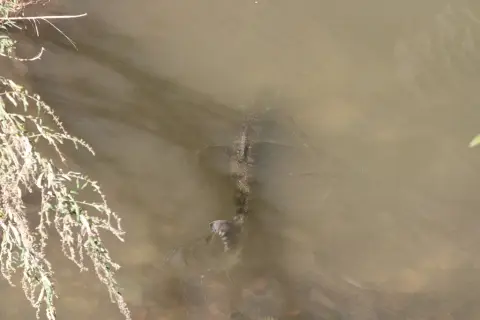
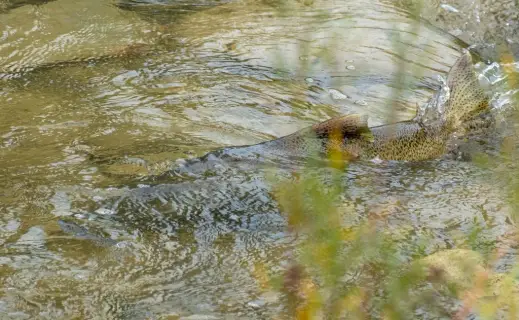
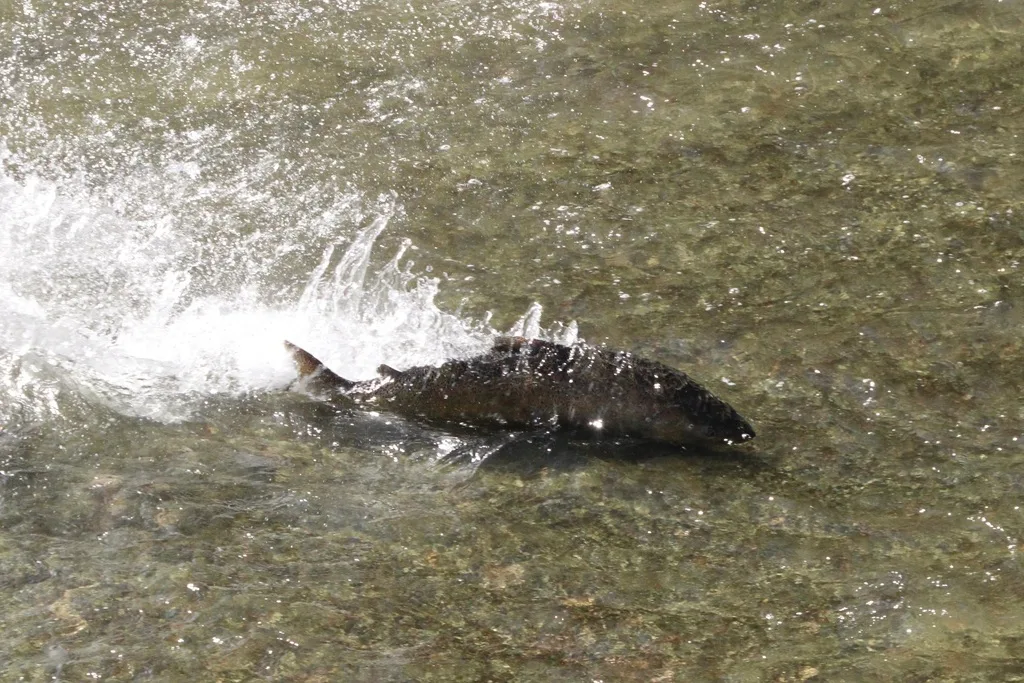
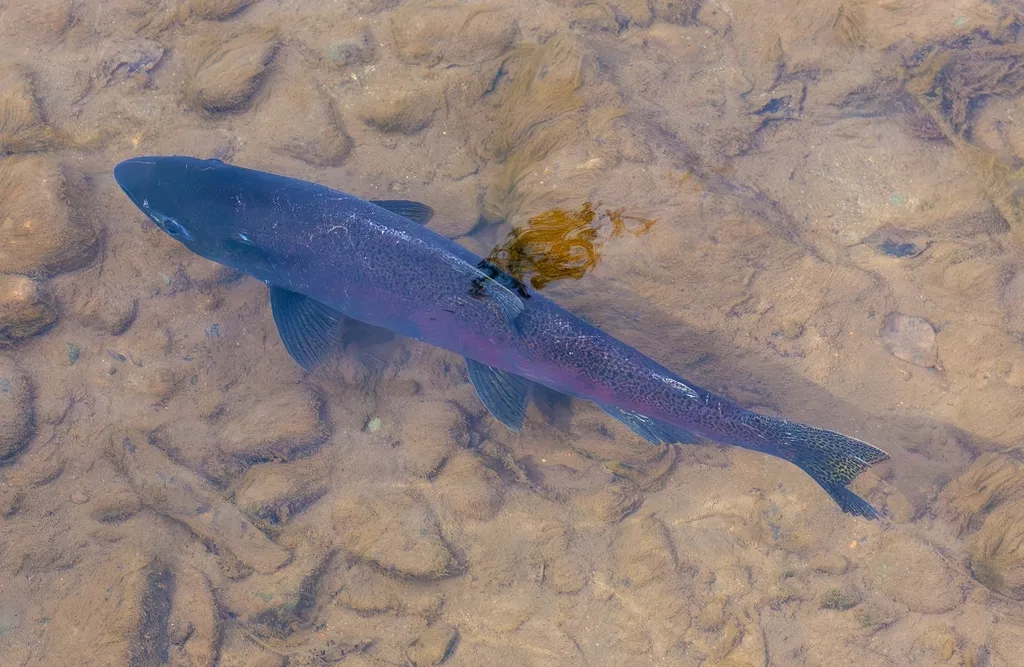
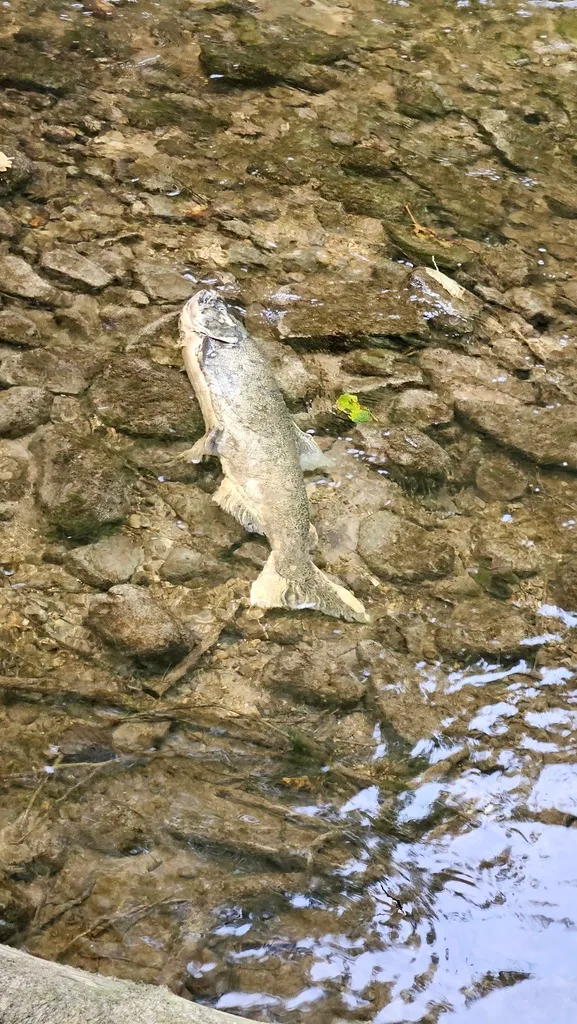
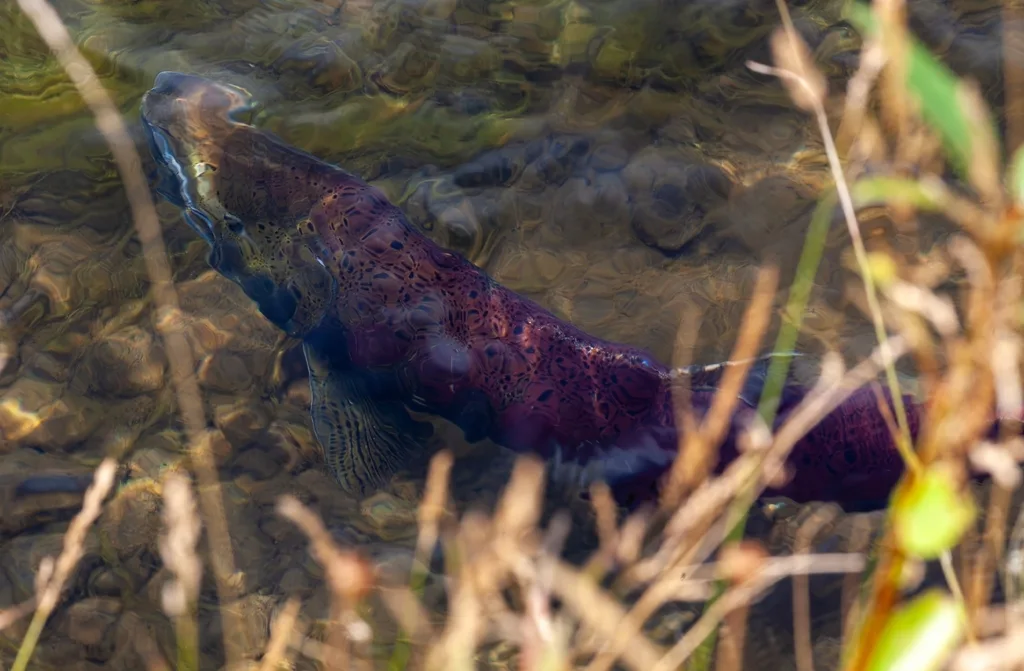
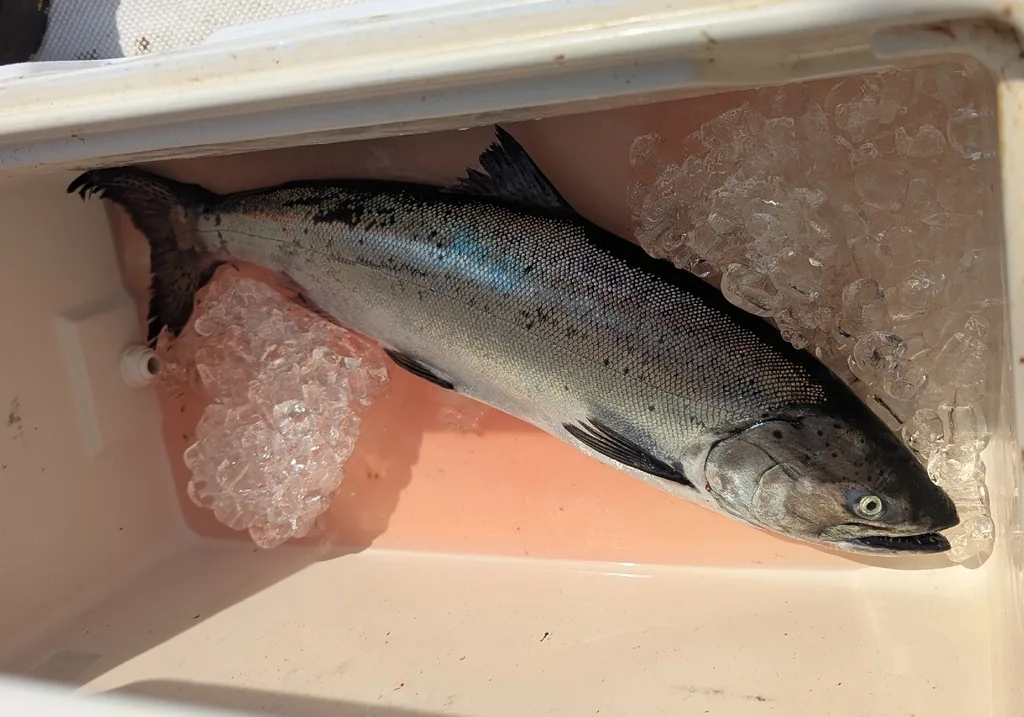
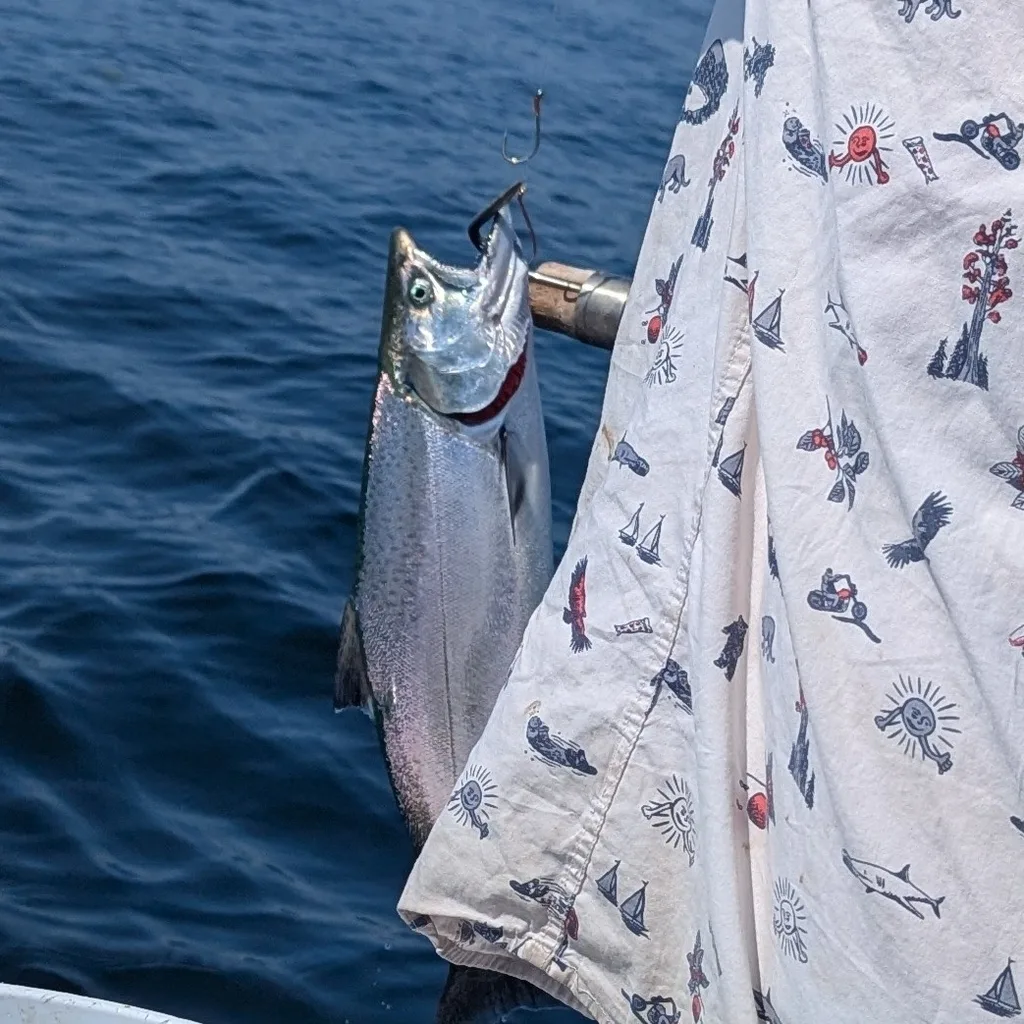
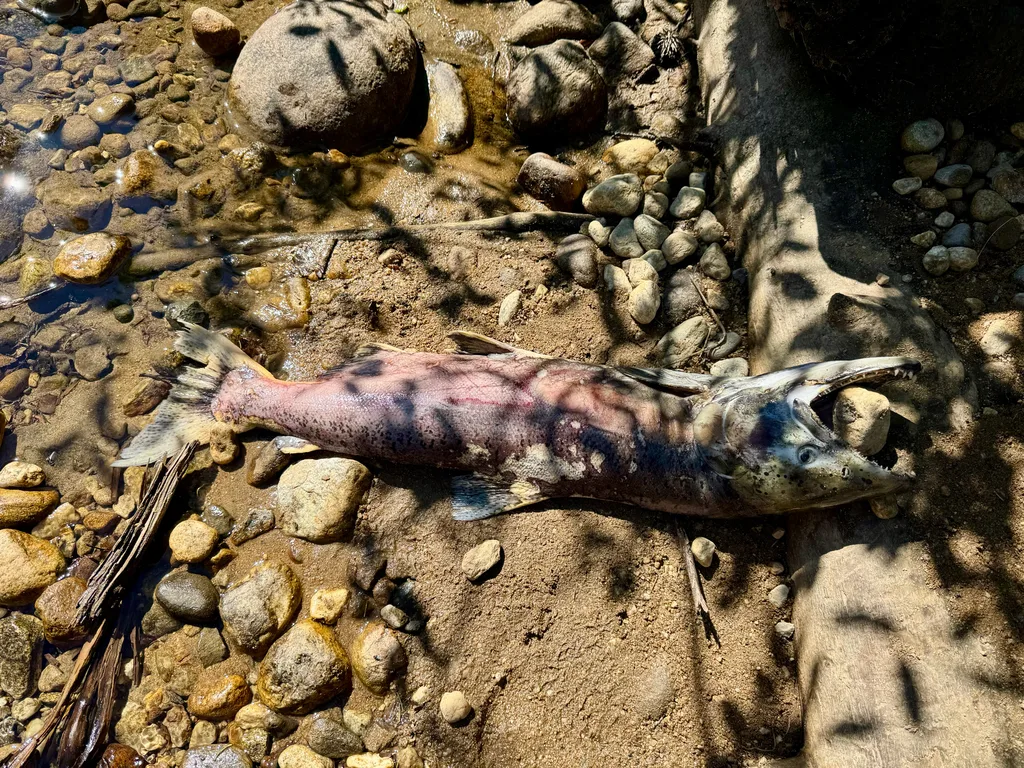
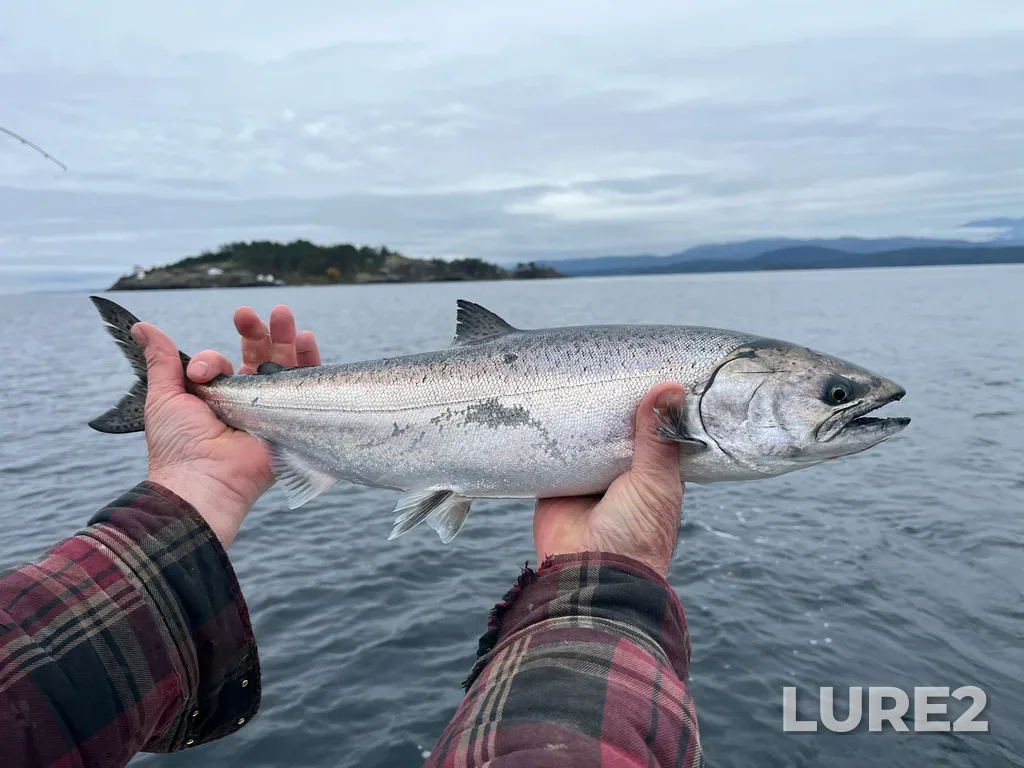
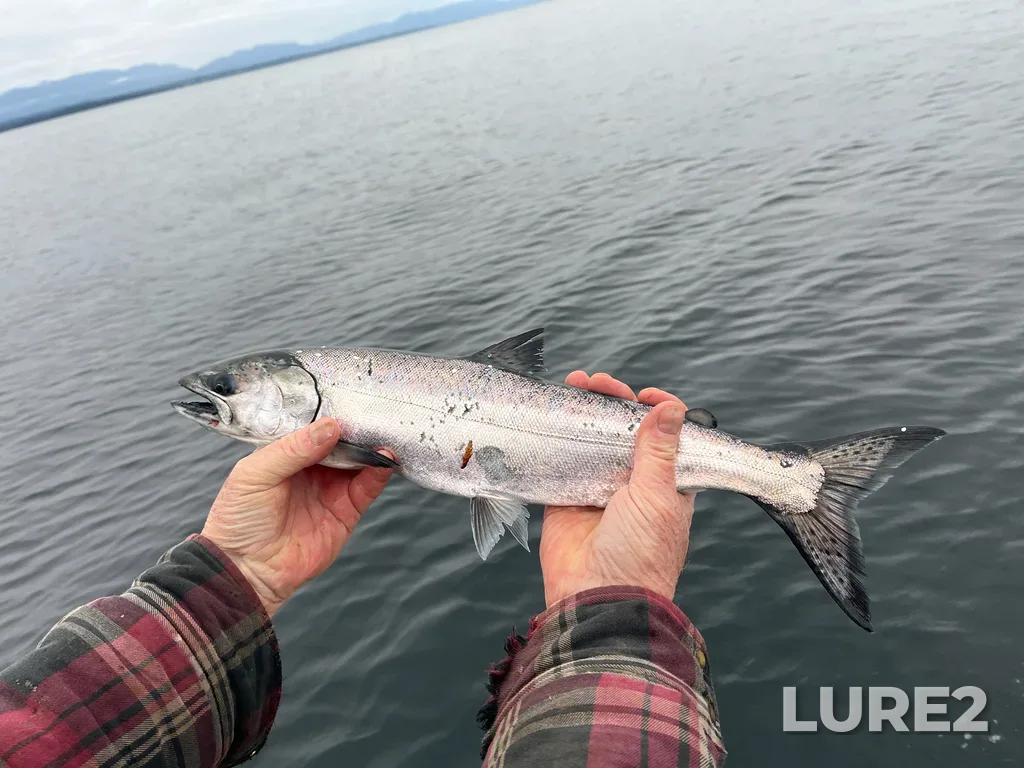
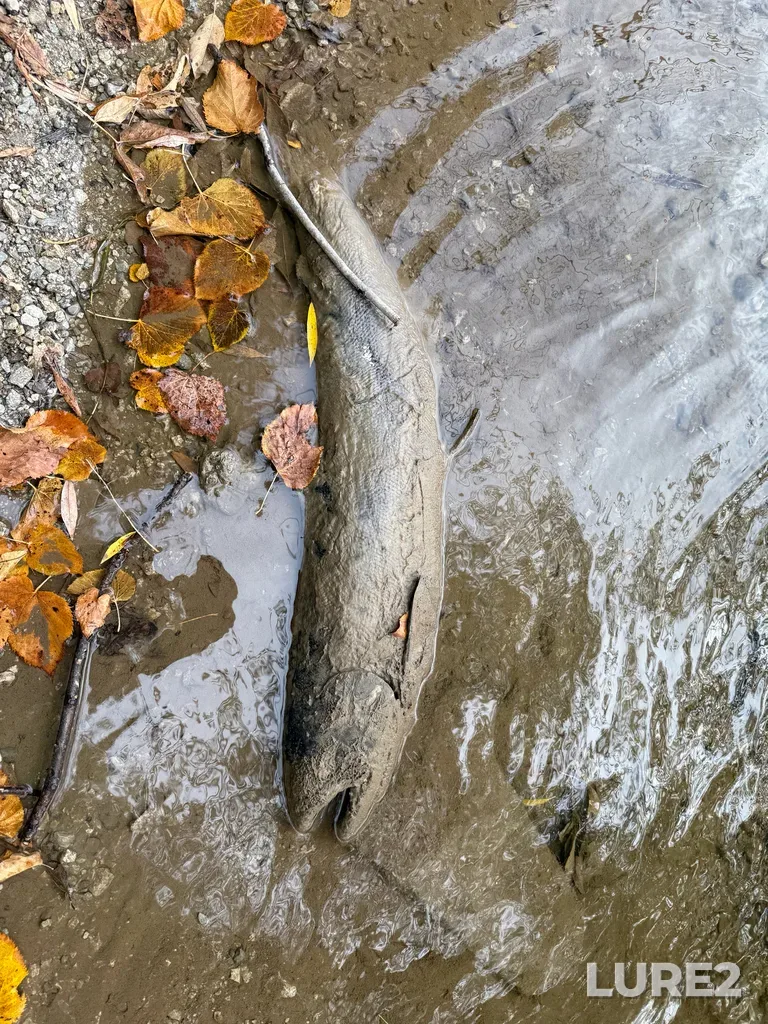
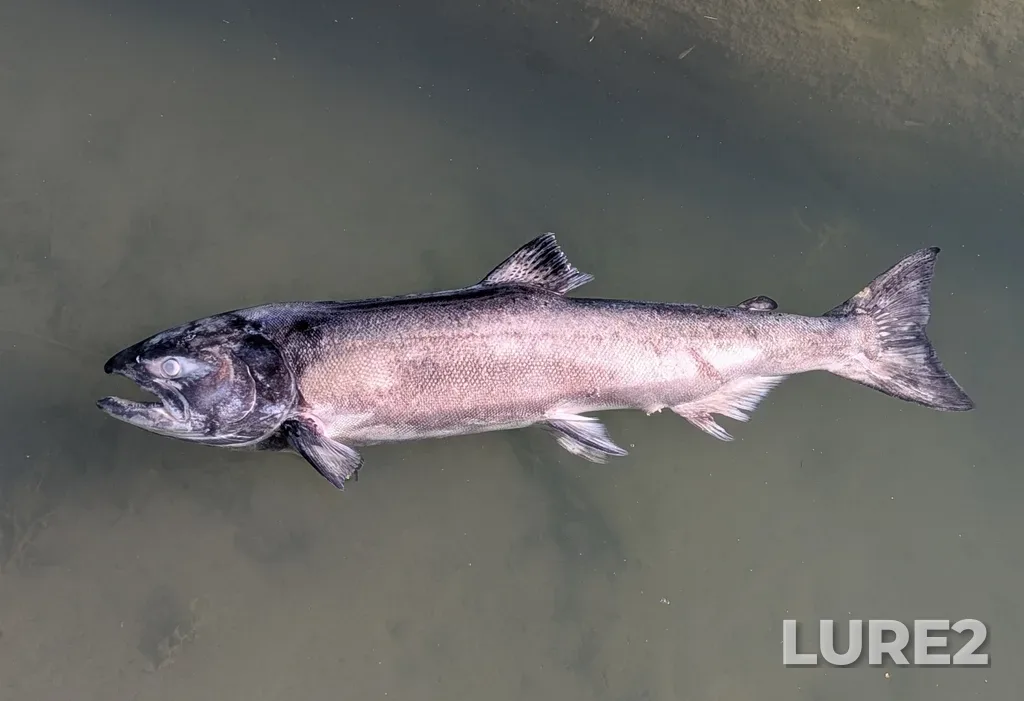
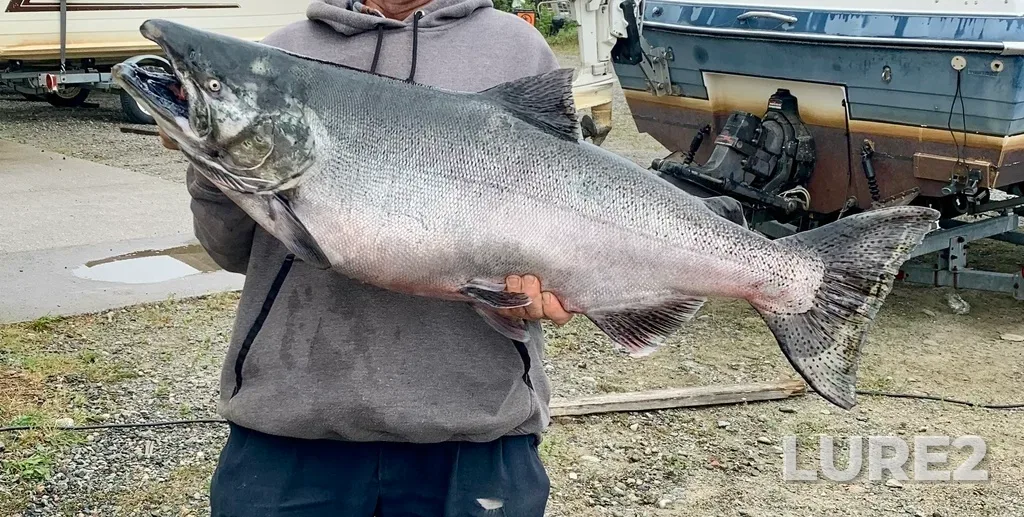
The chinook (Oncorhynchus tshawytscha), called king salmon on the Pacific coast, is the largest of the Pacific salmon — black gums, a spotted tail and, in the ocean phase, a bright silver flank that turns olive to maroon as the fish ripens for the river. Ocean and Great Lakes fish of 5–15 kg (10–30 lb) are the working range, and rivers with big runs produce fish well past 20 kg.
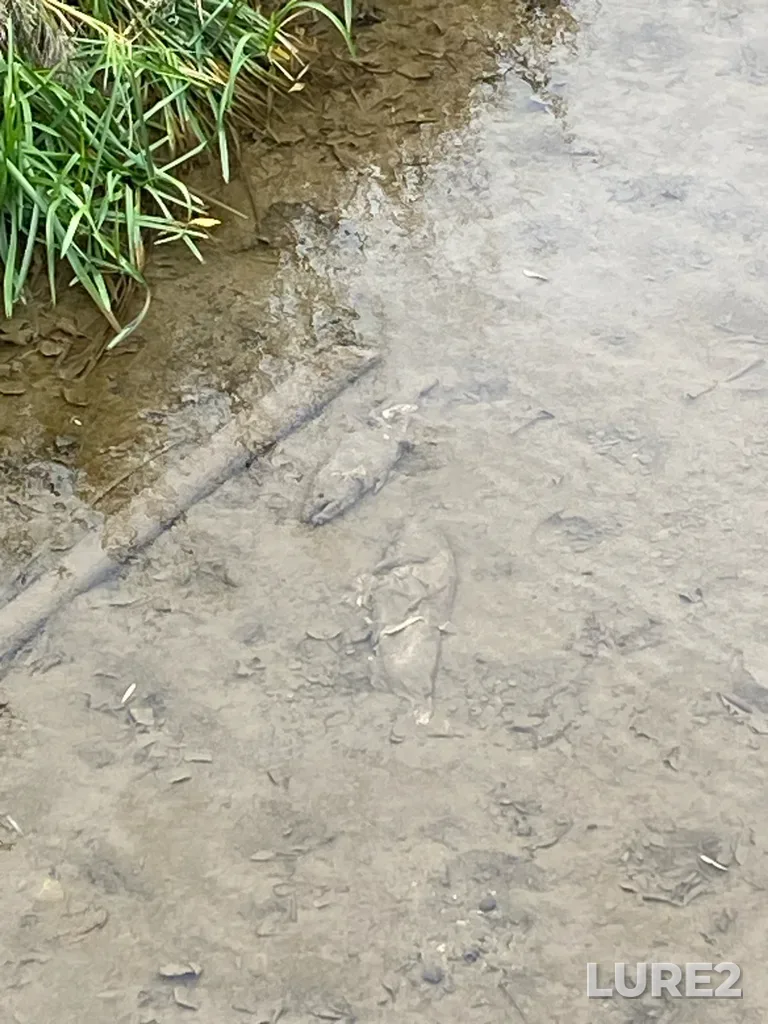
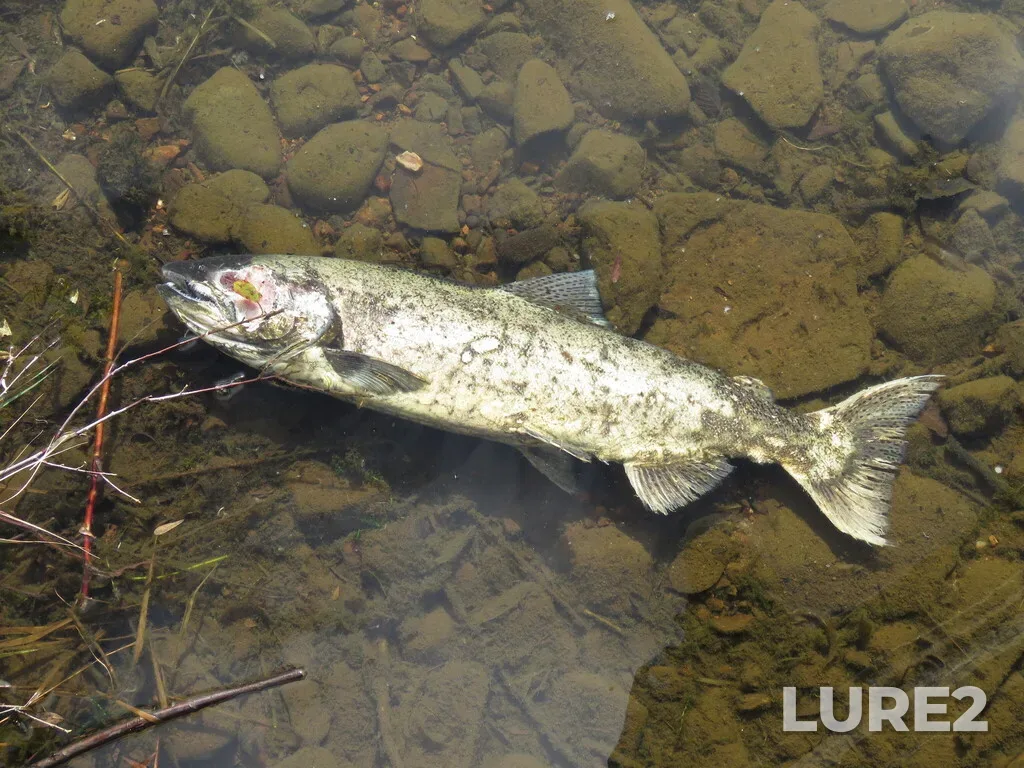
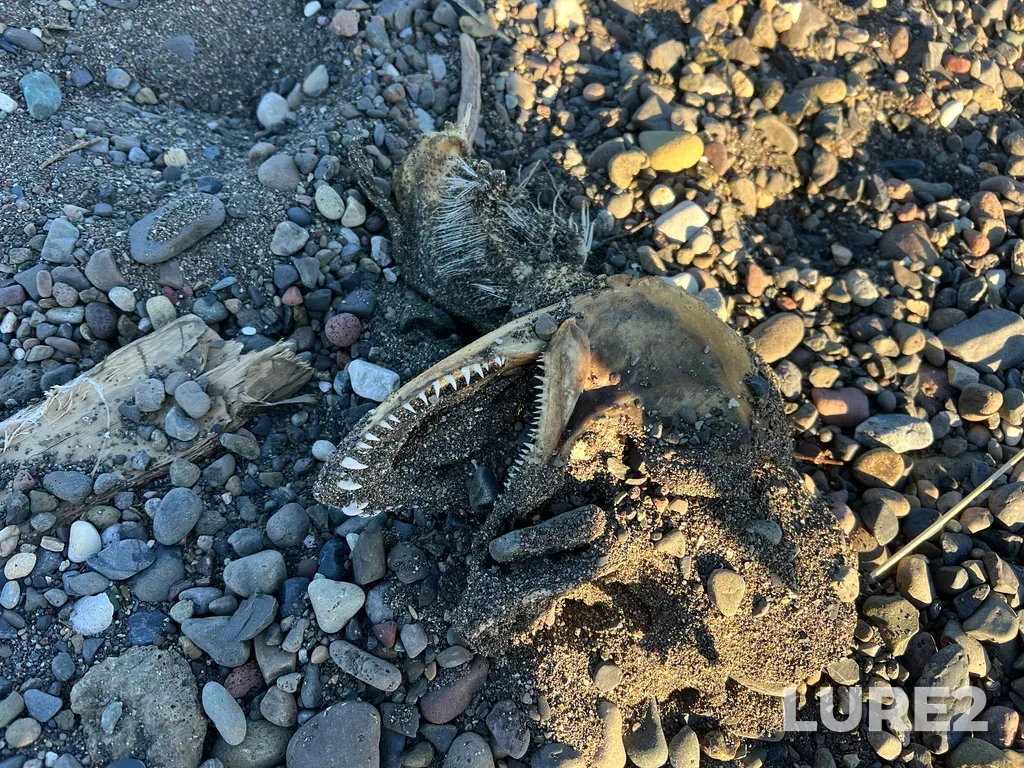
Kings spend two to seven years feeding at sea — or in the Great Lakes, where they were stocked to control alewife — and then return to the river of their birth to spawn once and die. Everything about catching them follows that clock: in salt water they are a bait-hunting, deep-holding fish found on structure and current lines; in the river they have stopped feeding altogether and take out of aggression and memory rather than hunger.
Spawning and seasons
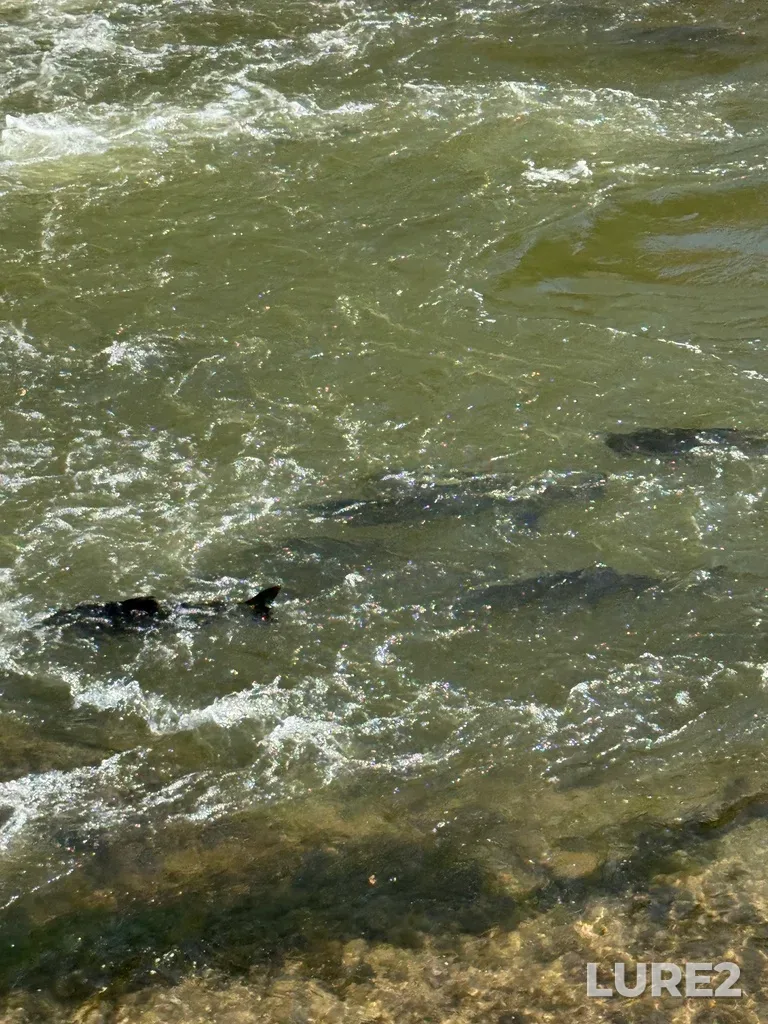
Chinook spawn in autumn on river gravel, and the run that precedes it is the fishery. Timing varies by system more than by latitude: spring-run fish enter big rivers like the Sacramento and Columbia from March, summer runs peak in June and July, and autumn runs — the biggest by far in the Great Lakes and much of the coast — push in from late August through October as water cools and rain lifts the rivers.
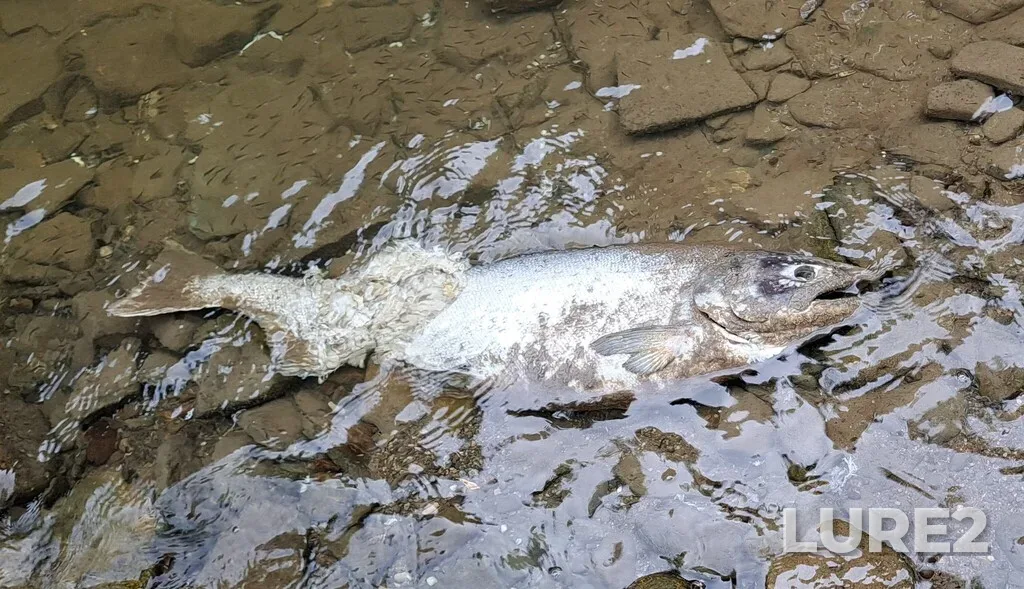
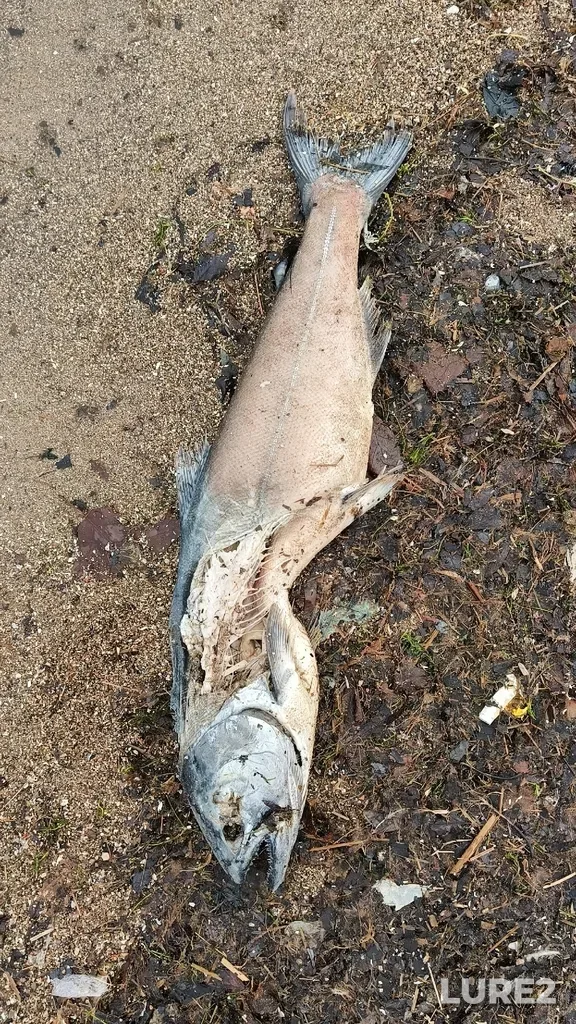
Our own catch records for the US show reports building through late spring and peaking in the summer months, which matches the coastal troll fishery: fish are caught at sea before they ever reach fresh water. Once in the river they colour up, stop feeding and quickly lose table quality, so the sweet spot is a fresh chrome fish in the lower river or the last weeks of the salt-water season.
When it bites
In salt water and the lakes, low light and moving water rule: the first two hours of daylight and the last two are the classic troll windows, and tide change on the coast concentrates bait and fish. Depth matters more than time of day — kings hold on a thermocline or a bait ball, and finding the right depth with a downrigger or a diver is most of the work.
In rivers, fresh fish move on rising, cooling water: the two or three days after autumn rain are the best of the year. Bright sun and low, clear water push the run into deep holes and make them nearly untouchable until light fades. Keep an eye on river gauges and water temperature — a drop of a few degrees can start a run overnight.
Methods and tackle
Trolling is the dominant salt-water and Great Lakes method: an 8–10 ft downrigger rod, a line-counter reel, 20–30 lb mono or 30–50 lb braid, and flashers or dodgers ahead of the bait to draw fish in. Downriggers, divers and lead core all serve the same purpose — putting the offering at the exact depth the fish are holding.
In rivers, the standard rigs are back-bouncing or drifting cured roe, plug-pulling with wrapped divers, float fishing beads and jigs, and swinging spoons or spinners. Tackle runs heavy: a 9–10 ft rod rated 15–30 lb, a strong reel with 150 m of line, and leaders of 15–25 lb. Assume the fish will run and plan where you can follow it.
Baits and lures
Cured salmon roe is the single most effective river bait where legal — cluster it on a hook under a float or back-bounce it through a slot. Herring and anchovy, whole or cut and rigged to roll, are the standard troll baits at sea, usually behind a flasher.
For artificials, carry heavy spoons in silver, green and blue, large spinners, plugs such as Kwikfish and Flatfish (often wrapped with sardine fillet), and beads or jigs for float work. Chartreuse and green attract in coloured or deep water; natural silver and blue shine in clear conditions. Scent matters more with kings than with almost any other salmon.
Playing and tips
A hooked king simply leaves: expect a first run that empties half a spool, so set a moderate drag, keep the rod up and be prepared to follow the fish along the bank or with the boat. Do not try to stop it early — let it work against the drag and the current, and only start gaining line when the runs shorten.
Regulations here are strict and change in-season: many rivers run quota-based closures, barbless-hook and no-bait rules, and mandatory release of wild (adipose-fin-intact) fish while allowing hatchery ones. Check the current state or provincial notices the week you go, not the season before. If you release a wild fish, keep it in the water — a spawning-run king that has stopped feeding has no reserves to spare.