Dace in United Kingdom — catches, stats & how to catch
Dace, the small shoaling river cyprinid of British streams: light float tackle, trotting with maggot, prime winter sport and the river close season. Map, top water bodies, and analytics — based on real angler reports.
Bite calendar for Dace
The best days and hours to fish — a bite forecast factoring in pressure, wind, temperature, and the moon phase.
Open the bite forecast →Description and behaviour
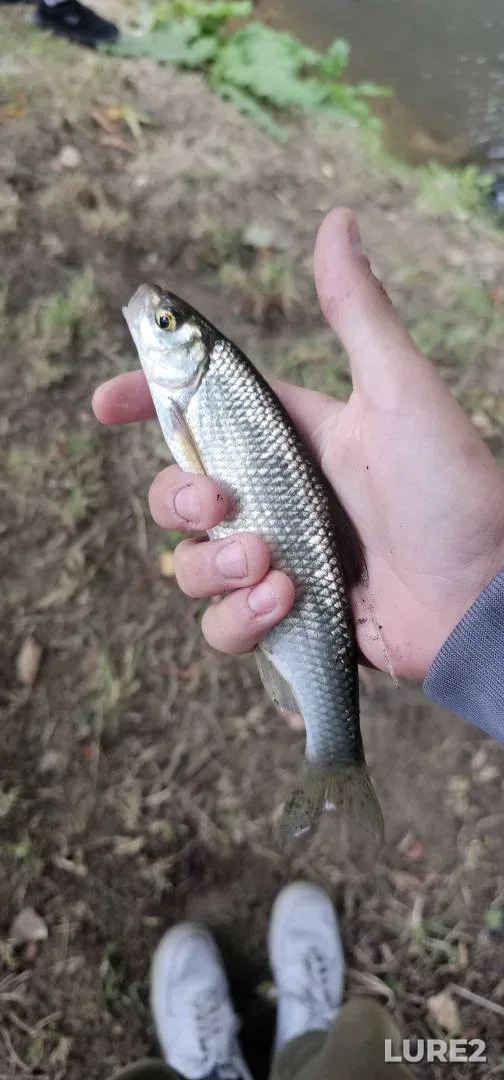
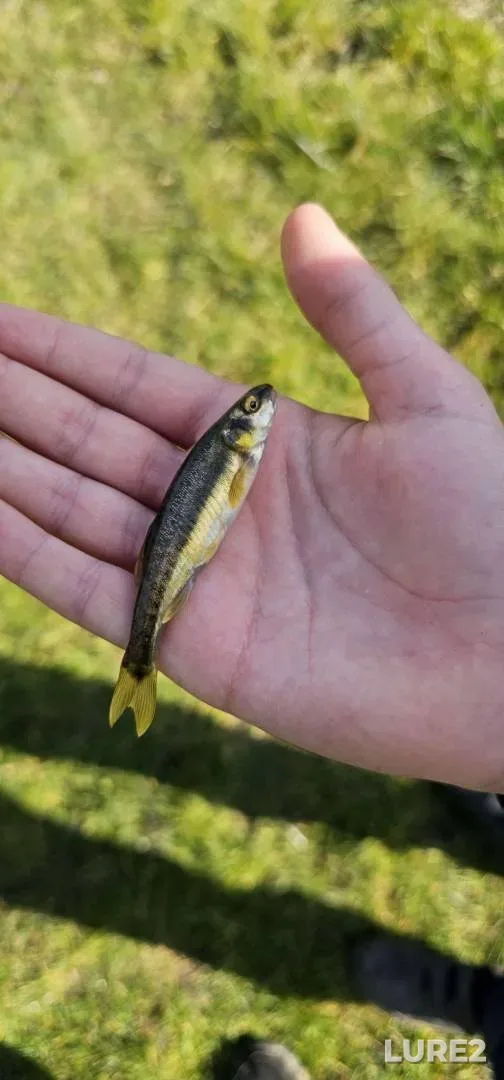
The dace (Leuciscus leuciscus) is a small, slim river cyprinid with a bright, faintly steely silver body, a greenish-grey back and yellowish fins. It looks like a miniature chub, but the body is more slender and the anal fin has a concave edge. A typical fish is 15–20 cm and 60–150 g; a specimen over 250 g is a good one, and a pound-plus dace (450 g) is a fish of a lifetime for many anglers.
Dace are fish of clean, flowing rivers, holding in tight shoals on riffles, glides and along the edge of the current where they take drifting food. They are quick, lively and highly active: the bite is lightning-fast and the strike must be instant. They feed on insects and their larvae, caddis, small crustaceans and plant matter, and rise freely to a hatch.
Spawning and seasons
Dace are among the earliest spawners, shedding their eggs in early spring, in March and April, on shallow gravel and sand runs with flow. As a river coarse fish they fall under the coarse close season: on running water in England and Wales fishing is banned from 15 March to 15 June inclusive, with the season opening on 16 June. The best dace fishing, though, is in autumn and winter, when the fish gather in dense shoals. Canals and enclosed stillwaters are exempt, but as a river fish dace must be fished within the close-season dates.
Where to find Dace through the year
- Spring
- Gravel riffles; one of the first to spawn.
- Summer
- On the current on and below riffles, close to the surface.
- Autumn
- Moves deeper, into holes below the riffles.
- Winter
- In holes with current; bites during thaws.
A guide to the species' habits on typical lowland waters; on any particular water the depths and spots are its own.
When it bites
Dace are renowned as winter sport: they stay active in cold water when other coarse fish are sluggish, giving steady bites from late autumn to the end of winter. They can be caught in summer too, but the cold months are the golden time, especially on clear, frosty days with the river at a low, steady level. Bites come throughout the daylight hours, often picking up around midday as the water warms slightly. When planning a winter trip, check a bite forecast and pick a settled, fair day free of a sudden flood.
Methods and tackle
The main method is trotting a light float: a stick float or waggler is run down the current, held back so the bait trails naturally near the bottom or at mid-depth. A light match or float rod is ideal, with 0.10–0.14 mm line, a 0.08–0.10 mm hooklink and small hooks of size 18–22. Because the bite is so quick, a sensitive depth setting and an instant strike are vital. In cold water a light feeder with a small cage feeder also works, but trotting is what truly shows this fish off.
Baits and lures
The best bait is the maggot, single or double, along with caster (the chrysalis) and a small piece of bread punch. A small piece of worm works, and in warm water dace rise to a fly on the fly rod or under a float. Feed sparingly and often — a pinch of maggots or casters loose-fed just upstream lifts and holds the shoal in the trot. You need very little groundbait: over-feeding quickly puts small fish off the feed and drifts the shoal out of the swim.
Playing and tips
Dace are small, so playing them is easy, but it takes delicate, balanced tackle and a soft strike to avoid tearing the mouth and to keep contact with the shoal. Fish fast and rhythmically: once you find the shoal, take fish after fish while keeping the feed going in. Respect the river close season of 15 March to 15 June, which coincides with the dace's early spawning, and don't disturb fish on the redds. Return your catch gently with wet hands and a soft net. An Environment Agency rod licence is required in England and Wales.