Steelhead in United States — catches, stats & how to catch
Steelhead in Pacific and Great Lakes rivers: winter and summer runs, float, fly and swing tackle, and how to read holding water. Map, top water bodies, and analytics — based on real angler reports.
Bite calendar for Steelhead
The best days and hours to fish — a bite forecast factoring in pressure, wind, temperature, and the moon phase.
Open the bite forecast →Description and behaviour
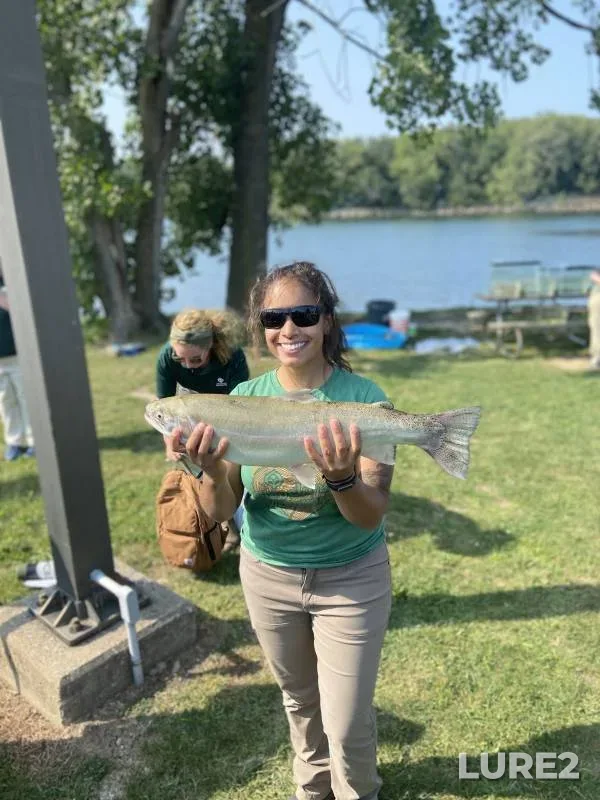
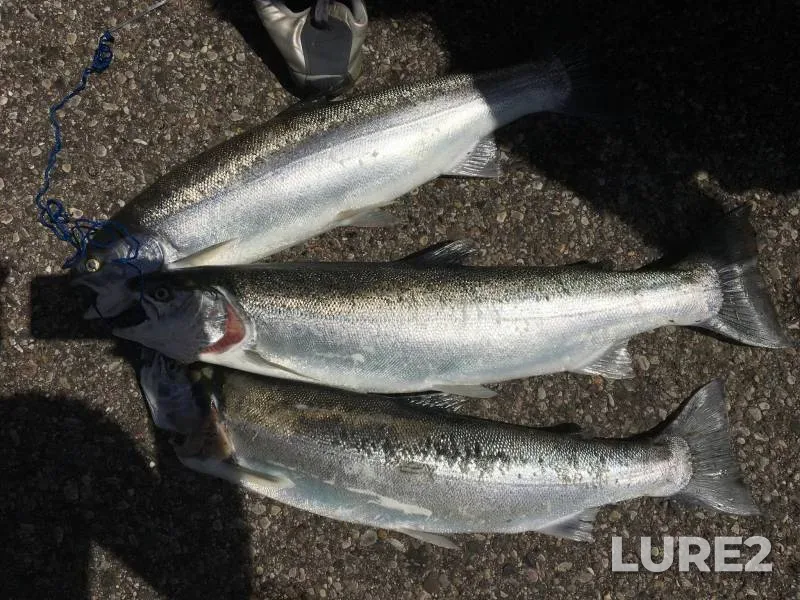
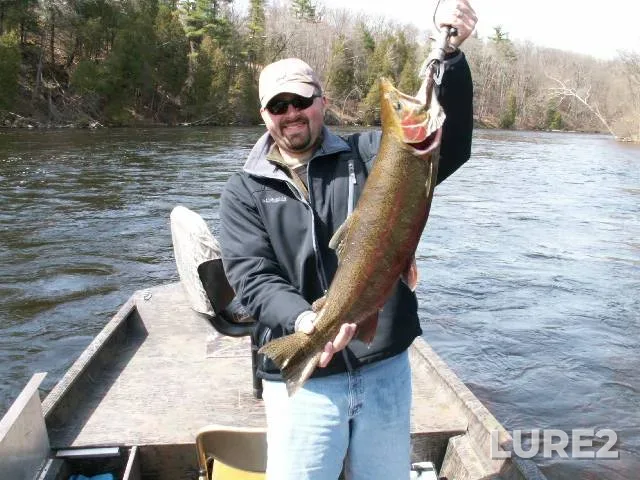
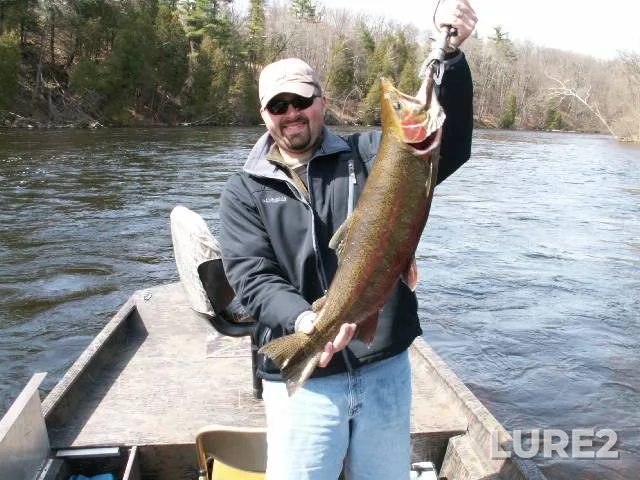
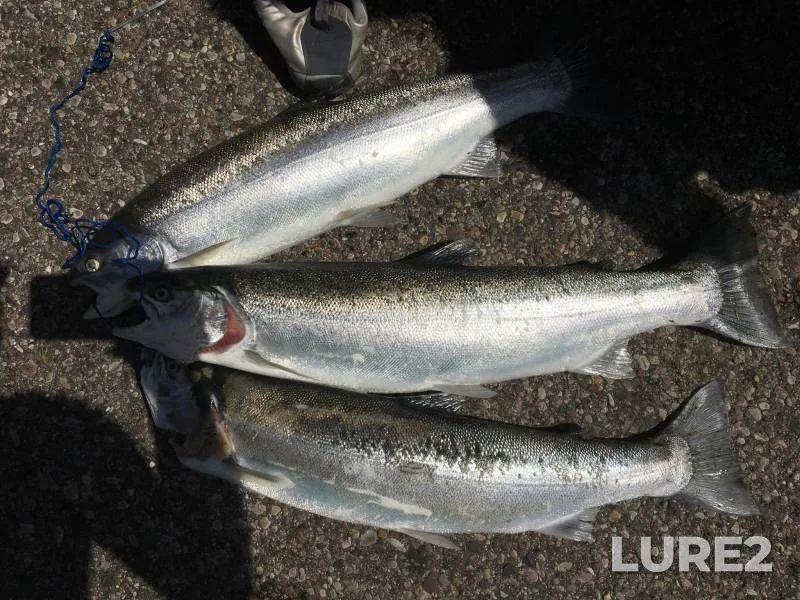
The steelhead is the sea-run (or lake-run) form of the rainbow trout — the same species, a different life history. A fresh fish is chrome-bright with a faint pink stripe that deepens as it holds in the river; typical fish run 2–5 kg (4–12 lb), with Great Lakes and northern coastal rivers producing larger.
Unlike Pacific salmon, steelhead do not necessarily die after spawning, and they keep feeding in fresh water — which is why they respond to a well-presented bait or fly rather than only to aggression. They hold in the classic soft seams: the tail-out of a pool, the inside of a bend, the slot behind a boulder, water about walking pace and chest to head deep. Learning to read that holding water is more than half of steelhead fishing.
Spawning and seasons
Steelhead spawn in spring, but the runs are split and that split defines the fishery. Winter-run fish enter rivers from late autumn through March, heavy and close to spawning; summer-run fish enter from late spring and hold in the river for months before spawning the following spring. Great Lakes tributaries follow the same rhythm, with the big push after autumn rain and a second wave at ice-out.
Our own catch records show reports for this species spread across the year with peaks at both ends — winter and early spring, then a summer window — which is exactly what the two-run structure predicts. Water level and temperature drive the calendar far more than the date: rivers fish best as they drop and clear after rain, and a warm spell in midwinter can turn a dead river on overnight.
When it bites
Green, dropping water after a rise is the steelheader's dream: enough colour to hide the angler, enough clarity for the fish to find the offering. Gin-clear low water demands finer leaders, smaller baits and first light; heavy chocolate water is usually a wasted trip.
Water temperature sets aggression. Below about 4 °C fish hold in slow, deep water and want a slow presentation right at their level; from 6 °C up they will move to intercept, and the swung fly or a stripped presentation starts working. Overcast days extend the bite; bright sun on clear water pushes it to dawn and dusk. Fish move on the tide in the lowest reaches and on the rise everywhere else.
Methods and tackle
Three main approaches. Float fishing — a 10–13 ft rod, a centrepin or spinning reel, a float set to run the bait just off the bottom — is the most versatile way to cover holding water. Fly fishing splits into swinging with a two-handed rod (7–8 wt, sink tip) and nymphing with an indicator. Drifting or side-drifting from a boat covers big rivers efficiently.
Leaders run 8–12 lb and lighter in clear water; main lines 15–30 lb braid or 10–15 lb mono. Whatever the method, the presentation is the same idea: dead-drift at the fish's depth, in the seam, with as little drag as the current allows.
Baits and lures
Cured roe and roe bags are the traditional and still the most effective bait where legal, followed by shrimp, worms and beads imitating loose eggs. Beads have taken over much of the Great Lakes fishery because they are cheap, durable and easy to fish clean.
For artificials, carry egg-pattern and nymph flies, intruder-style swing flies, small spoons and spinners, and jigs fished under a float — a marabou jig in black, pink or purple under a float is one of the deadliest steelhead presentations there is. Pink and orange for coloured water, natural and black for clear.
Playing and tips
Steelhead jump, run downstream and use the current relentlessly — keep the rod bent and low on jumps, let the fish run against a light drag, and move downstream after it instead of pulling upstream against the flow. Most fish are lost in the first ten seconds by trying to stop that first run.
Rules are dense: many rivers require barbless hooks, ban bait in certain reaches or seasons, close spawning water in spring and require the release of wild (adipose-intact) fish while allowing hatchery ones. Check the current regulations for the specific reach, not just the state. Handle wild fish in the water, never lift a spawning fish onto dry gravel, and give it time facing the current before release.