Striped bass in United States — catches, stats & how to catch
Striped bass on the US coast and in landlocked reservoirs: spring and autumn runs, live bait and trolling, tackle, and the rules that govern them. Map, top water bodies, and analytics — based on real angler reports.
Bite calendar for Striped bass
The best days and hours to fish — a bite forecast factoring in pressure, wind, temperature, and the moon phase.
Open the bite forecast →Description and behaviour
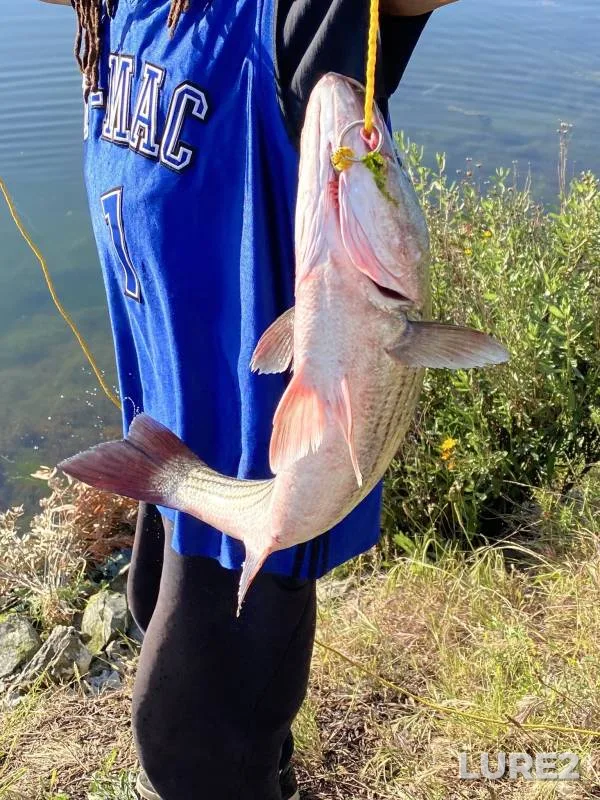
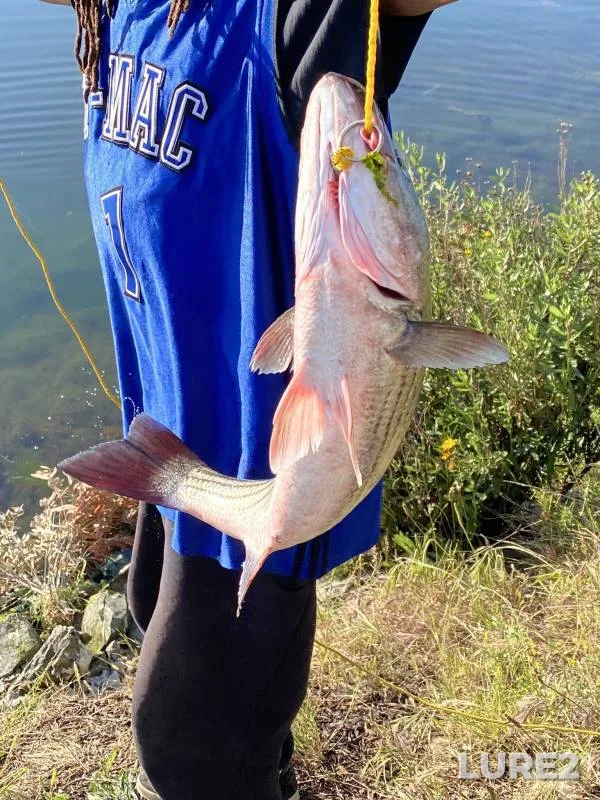
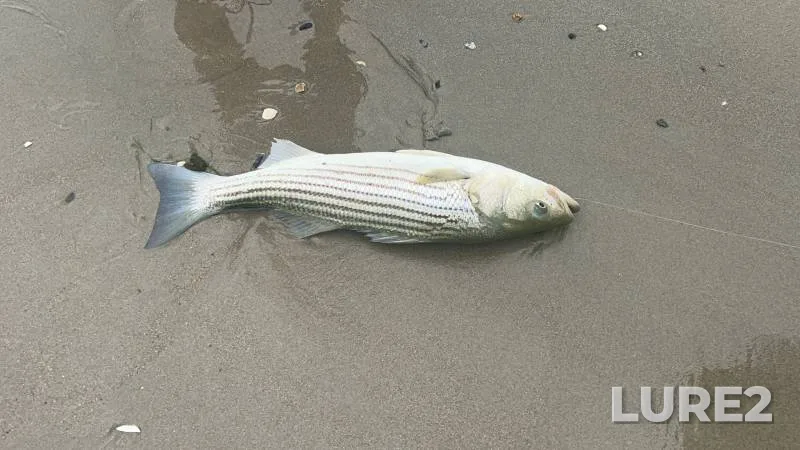
The striped bass (Morone saxatilis) is a silver, seven-striped predator that runs both salt and fresh water. On the Atlantic coast it is an anadromous migrant that winters offshore and runs the estuaries and rivers in spring; inland, stocked landlocked populations live out their lives in big reservoirs. Coastal fish of 5–15 kg are routine and much larger fish exist; landlocked stripers commonly run 2–8 kg.
Stripers are open-water hunters that follow bait. They herd river herring, menhaden, alewife and shad against structure — rips, bridge pilings, points, dam tailraces — and feed in violent, short-lived bursts. That makes them a fishery of moving water and moving bait rather than of cover: find the bait and the current seam, and you have found the fish.
Spawning and seasons
Coastal stripers spawn in fresh and brackish river water in spring, roughly April to June, when the water reaches about 60–68 °F (15–20 °C); landlocked fish make the same run up feeder rivers and tailraces, though many populations spawn unsuccessfully and are maintained by stocking. Either way the spring run is the season most anglers plan around.
The year has two peaks. Spring brings fish into the rivers and the shallows; autumn brings the blitz — cooling water and migrating bait push stripers into feeding frenzies that can be visible from the beach. Summer splits them: coastal fish go nocturnal and hold in cooler rips and deeper water, while reservoir stripers are squeezed into a narrow band of cool, oxygenated water and are found with electronics rather than by casting. Our own catch records show reports peaking in spring and again in the autumn run.
When it bites
Tide governs coastal striper fishing more than anything else. Moving water — the middle hours of a flood or ebb — concentrates bait and turns fish on, and slack water usually turns them off; a spot that is dead at high water can be excellent two hours later. Night and the hours around dawn and dusk are the most productive, particularly in summer and around a bright moon.
On reservoirs the equivalent trigger is generation at the dam: water pulled through a tailrace stacks bait and stripers below it. In both cases, look for surface activity — birds working, bait showering — and be ready to move fast, because a blitz can last minutes. A tide table and a bite forecast are more useful here than for almost any other species.
Methods and tackle
Match the tackle to the fish, which are big and strong. Surf and boat casting for coastal fish calls for a 9–11 ft surf rod or a 7–8 ft heavy spinning rod, a 5000–8000 reel, 30–50 lb braid and a fluorocarbon leader. Reservoir fishing runs lighter — a medium-heavy 7 ft rod, 20–30 lb braid — but keep the drag generous either way.
The standard methods are live-lining bait (herring, bunker, gizzard shad) on a circle hook, trolling umbrella rigs and deep-diving plugs to cover water, and casting plugs and swimbaits to breaking fish. Down-lining live bait over structure is the summer answer on reservoirs. Circle hooks are not optional on much of the Atlantic coast — several states mandate them for bait fishing to reduce release mortality.
Baits and lures
Live bait catches the biggest fish: bunker, herring and eels on the coast, gizzard shad and trout where legal on reservoirs. Fresh chunk bait fished on the bottom in the surf is a long-standing and very effective approach.
For artificials, carry big soft-plastic swimbaits and paddle tails, pencil poppers and spooks for breaking fish, bucktail jigs for current and deep water, and metal-lipped or deep-diving plugs for trolling. Sizes are large by freshwater standards — 5–9 in baits are normal, because the bait they are eating is that size. White, chartreuse, bunker and herring patterns cover most water.
Playing and tips
A striper fights with long, heavy runs rather than jumps, and it will use current and structure to break you off, so set the drag to give line and steer the fish away from pilings and rocks. Wet your hands, support a big fish horizontally with two hands, and never hold one vertically by the jaw — that damages the fish you intend to release.
Regulations here are stricter and change more often than for any other US freshwater fish: coastal striped bass are managed under a coast-wide plan with slot limits, seasons and gear rules that shift year to year, and inland reservoirs have their own limits. Check the current state rules before every trip, not once a season.