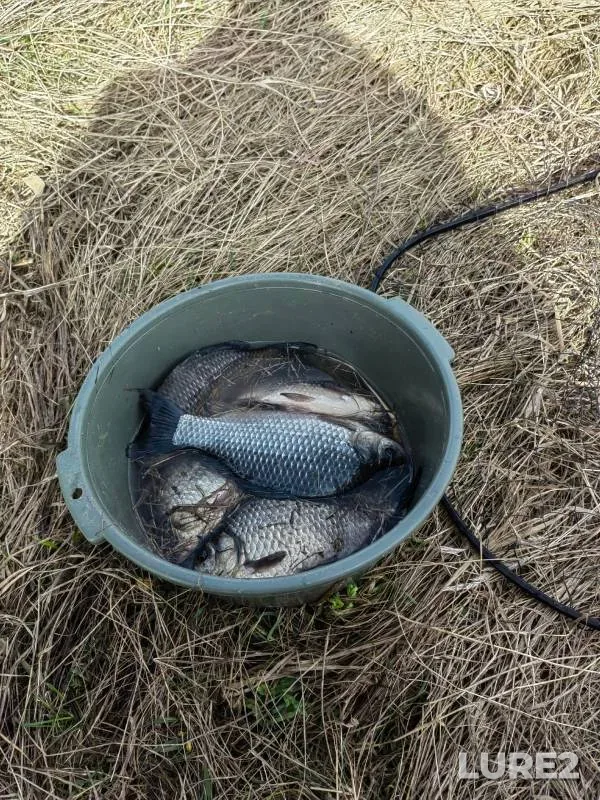
Catches
Recorded 1 catch here. Most commonly caught: Crucian carp. Peak season: April.
Did not find what you were looking for, or something looks wrong? Tell us — we read every message.
We use cookies for analytics and advertising. Cookies necessary for the site to function are always kept. Learn more
Няньга — река длиной почти 71 километр, протекающая в Пензенской области и впадающая в Узу, которая, в свою очередь, входит в бассейн Волги. Река расположена близко к небольшим городам — всего в нескольких километрах от Шемышейки и Малой Сердобы, что делает её вполне доступной для однодневной поездки на рыбалку. Простор и естественная природа реки создают атмосферу настоящего погружения в водный мир средней полосы.
На Няньге рыбаки найдут разнообразие видов: от бойкого ерша и плотвы до более крупных хищников, таких как щука и жерех. Здесь также можно встретить налима и сома, что добавляет интереса к рыбалке. Ловля на эту реку — возможность поработать разными снастями и насладиться охотой за разной рыбой, будь то активный жор уклейки или осторожный клев язя.
Partly cloudy: 13–19 °C
Local communities and country-wide chats for anglers.
Monday, September 7
The bite is strong — fish are active. Pressure is rising — activity tends to be more subdued.
Best time — 05:00–07:00 (dawn bite) and 18:00–20:00 (dusk bite).
Work the cover — snags, weed edges, hole entrances; retrieve the lure with pauses.
The water's turning murky — go with bright, noisy lures: casting spoon or long-casting spoon.
Pack transitional-season clothing — mornings and evenings are chilly. Rain is expected — don't forget a rain jacket or a waterproof shell.
Worth going — it's a productive day.
The computed water temperature is around 16 °C — inside the 12–24 °C comfort range for Asp, so baseline activity is high.
Asp works the twilight: the peaks are pinned to sunrise and sunset — their times are in the sun-and-moon card above.
Pressure is rising 5 hPa over the day — the bite usually settles down after a rise.
One more input — the moon's feeding windows: within their hours the score sits higher than across the rest of the day. The window times are in the “Solunar feeding periods” card below.
September is peak season for Asp here.
These are the same values the bite curve above was computed from. How the forecast works
Cloudy · feels like +14°
The day is 4 min shorter than yesterday.
Sunshine hours count direct sun only — cloud cover cuts it, so it is shorter than daylight.
The windows are set by the moon's transit and rise, and the forecast above already accounts for them: within these hours the bite score sits higher than across the rest of the day, while the day's overall level still comes from the catch-calibrated model.
What are solunar periods?Recorded 1 catch here. Most commonly caught: Crucian carp. Peak season: April.